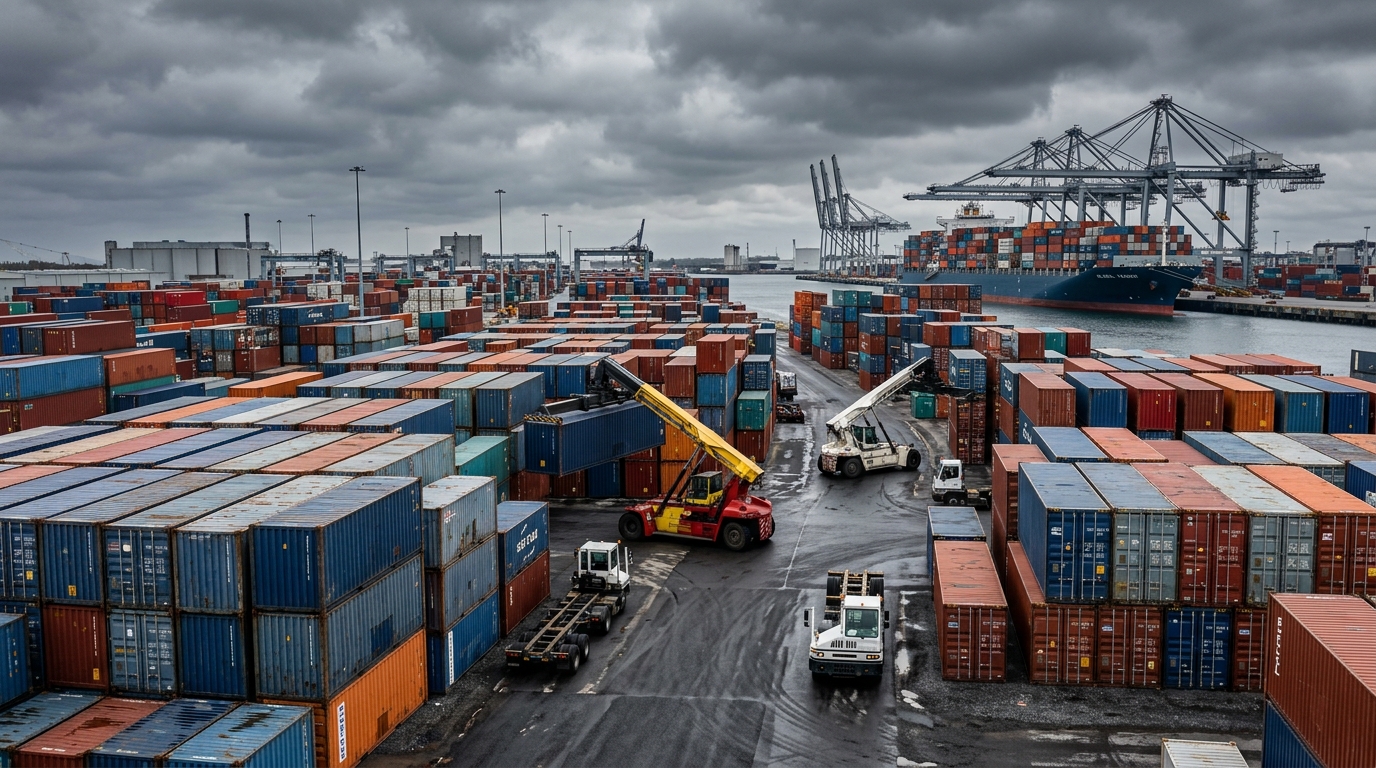
An international rice sale follows a recognizable sequence regardless of the specific parties involved: inquiry and offer, contract negotiation, quality verification, production and processing, pre-shipment inspection, documentation and customs clearance, loading and transport, and finally delivery and payment. Each step involves distinct players, agreements, and risk transfers that collectively enable a container of rice to move from a Pakistani mill to a buyer on the other side of the world.
Global rice trade moves billions of dollars worth of product annually across national boundaries. The system that enables this trade has developed over decades—standardized contracts, established banking instruments, regulated logistics providers, and quality verification systems that allow strangers on opposite sides of the world to transact confidently.
The Basic Export Transaction Flow
An international rice sale follows a recognizable sequence regardless of the specific parties involved:
Inquiry and offer: The process begins when a buyer sends an inquiry specifying quantity, quality requirements, packaging preferences, and destination port. The exporter responds with a detailed offer including price, specifications, and terms.
Contract negotiation: When terms are acceptable, both parties execute a sales contract specifying quantity, quality specifications, price, payment terms, delivery terms, and dispute resolution mechanisms. Rice trade typically uses standard contract forms—FOSFA contracts for edible oils and oilseeds including rice are common in Asian trade.
Quality verification: Before shipment, the seller typically provides samples for buyer approval. Some transactions proceed on approved samples; others involve third-party inspection at loading, following international trade practices documented by FAO.
Production and processing: Once contracts are executed, the seller arranges for rice procurement, processing to specification, and packaging.
Pre-shipment inspection: Third-party inspection agencies—SGS, Bureau Veritas, Intertek—verify quality and quantity before loading. Their reports provide independent confirmation of shipment specifications.
Documentation and customs: Export documentation must comply with both origin and destination country requirements. Export clearance from Pakistan requires specific certificates; import clearance in the destination country requires different documentation.
Loading and transport: Rice moves from processing facility to port, into containers or breakbulk vessel, and ultimately to destination port.
Delivery and payment: Upon arrival, the buyer completes import clearance and takes delivery. Assuming documentation matches contract terms, payment releases according to agreed terms.
Incoterms: The Language of Delivery Terms
Incoterms—International Commercial Terms—provide standardized definitions for delivery responsibilities in international trade. These terms, published by the International Chamber of Commerce, specify which party bears responsibility for transportation costs, insurance, and risk at each stage of delivery.
For rice exports from Pakistan, several Incoterms are commonly used:
FOB (Free on Board): The seller delivers when the goods pass the ship's rail at the port of loading. The buyer bears all costs and risks from that point. FOB is common when buyers arrange their own ocean transport. For FOB Karachi, the seller handles delivery to the vessel and pays export clearance costs.
CFR (Cost and Freight): The seller delivers when goods pass the ship's rail, but unlike FOB, the seller also pays costs to transport goods to the named destination port. Risk transfers at the port of loading; the seller bears transport costs but not insurance.
CIF (Cost, Insurance, and Freight): Similar to CFR, but the seller also provides insurance coverage during transport. For rice, CIF Dubai or CIF Shanghai are common contract terms.
EXW (Ex Works): The seller makes goods available at their premises. The buyer bears all costs and risks of transportation from the seller's location. EXW gives maximum responsibility to the buyer; rarely used for rice exports.
Understanding Incoterms prevents disputes about which party is responsible for transport costs, handling damage, and delivery timing.
The Role of Trading Houses and Exporters
International rice trade involves multiple types of commercial participants:
Direct exporters purchase paddy or milled rice from farmers or processors, arrange export documentation, and sell directly to international buyers. Large Pakistani exporters like major mill groups operate this model, maintaining direct relationships with both suppliers and international buyers.
Trading houses operate across multiple origins, connecting buyers seeking specific origin rice with sellers in producing countries. Trading houses don't necessarily handle physical product themselves—they arrange transactions between parties who handle logistics.
Consolidators aggregate smaller lots from multiple suppliers to create export shipments of sufficient size for efficient transport. Consolidators provide the logistics capability that individual small processors lack.
Commission agents connect buyers and sellers while earning commissions from either or both parties. The agent doesn't take ownership of the rice but facilitates transactions.
The structure you work through depends on your scale, market access, and risk appetite. Direct export offers higher margins but requires more infrastructure; trading through established channels offers lower margins but reduces operational complexity.
Payment Terms in Rice Trade
Payment terms balance seller security against buyer trust:
Letter of Credit (L/C): The buyer's bank issues a Letter of Credit promising payment upon presentation of compliant documents. L/Cs provide the highest security for sellers—payment is guaranteed by the issuing bank if documentation complies with terms. For rice exports, transferable or non-transferable L/Cs at sight or usance are common.
Documents Against Payment (D/P): Documents—typically through a bank—transfer to the buyer upon payment. The buyer gains documentation without prepayment but must pay to receive shipping documents enabling them to take delivery.
Documents Against Acceptance (D/A): Similar to D/P but the buyer accepts a time draft rather than making immediate payment. Payment occurs at the draft's maturity. Risk is higher for sellers but terms are more buyer-friendly.
Open Account: The seller ships goods and trusts the buyer to pay according to agreed terms. Open account terms require established trust between parties and expose sellers to buyer non-payment risk.
For new relationships, L/C terms provide security while trust develops. As relationships mature, more flexible terms may become possible.
Logistics: From Mill to Destination
Rice logistics from Pakistan typically involve:
Land transport to port: Rice moves from processing facilities—by road to Karachi typically—to port storage or directly to container yards. Bagged rice and bulk containers follow different loading protocols.
Port handling: Port operations include receiving, storage pending loading, loading onto vessels, and stowage within the ship. Port congestion periodically creates delays that affect delivery schedules.
Ocean transport: Containerized rice and breakbulk rice follow different shipping patterns. Container shipping offers flexibility and smaller minimum quantities; breakbulk shipping provides lower rates for large shipments.
Destination port operations: Arrival procedures include port charges, customs clearance, and delivery. Destination port handling costs significantly affect total delivered cost.
Quality Assurance Systems
International rice trade requires quality assurance systems that allow parties in different locations to transact confidently:
Contract specifications: Written quality specifications provide the baseline for quality verification. Specifications cover grain dimensions, broken percentage, moisture content, color, impurity limits, and any other parameters material to the transaction.
Approved samples: Many transactions proceed on the basis of approved samples. The seller produces samples that the buyer approves; subsequent shipments must match approved samples. Sample retention provides reference for dispute resolution.
Third-party inspection: Independent inspection agencies provide objective quality verification. SGS, Bureau Veritas, Control Union, and Intertek all provide rice inspection services globally. Their inspection reports provide evidence of quality at the time of inspection.
Survey agencies: For cargo quantity and condition verification, survey agencies confirm weight, condition, and loading practices. Their certificates support insurance claims and quality disputes.
Conclusion
International rice trade operates through established systems that enable transactions between parties who may never meet in person. Understanding how these systems work—Incoterms, payment terms, quality assurance, logistics—enables informed participation in global rice markets.
The complexity isn't arbitrary; each component addresses real risks that would otherwise prevent international trade. Letters of Credit address payment risk. Incoterms address delivery responsibility disputes. Third-party inspection addresses quality verification across distance. The system works—when participants understand it.