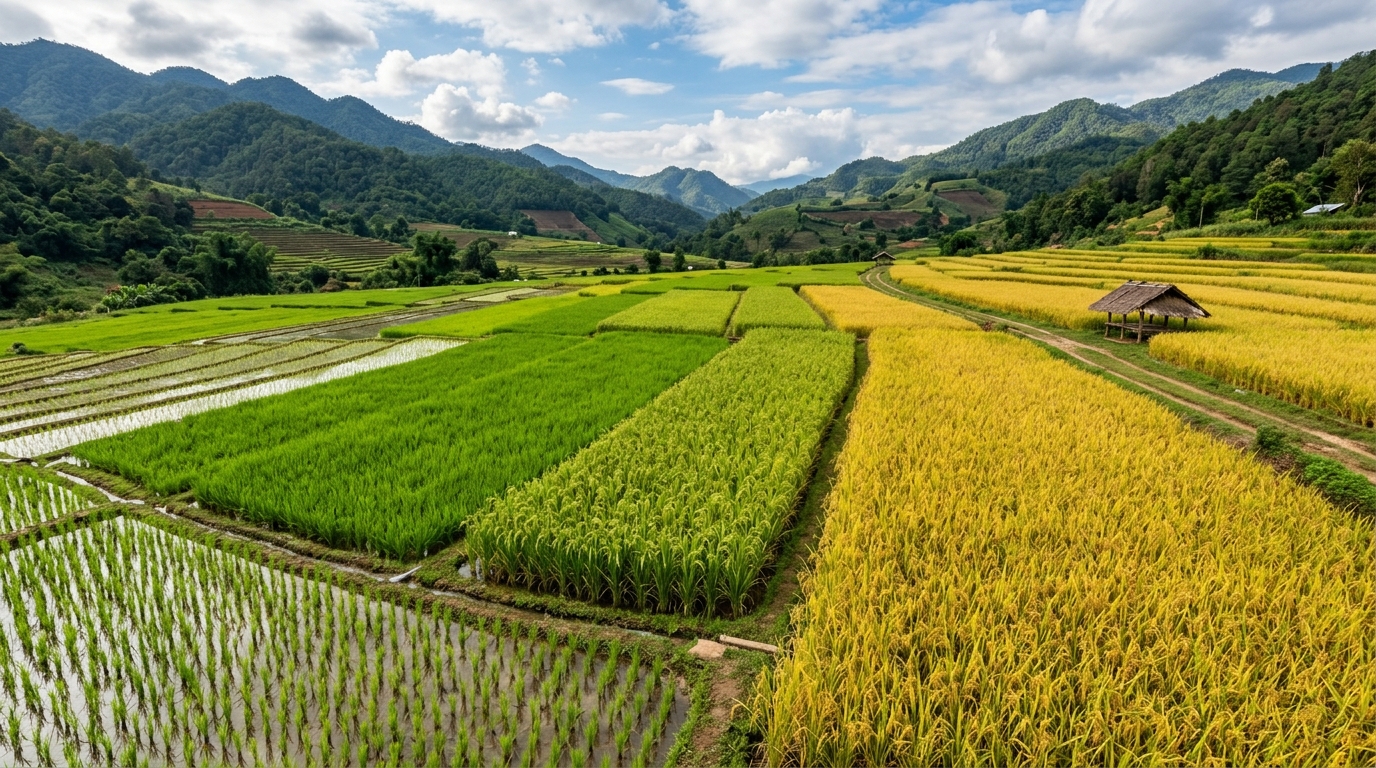
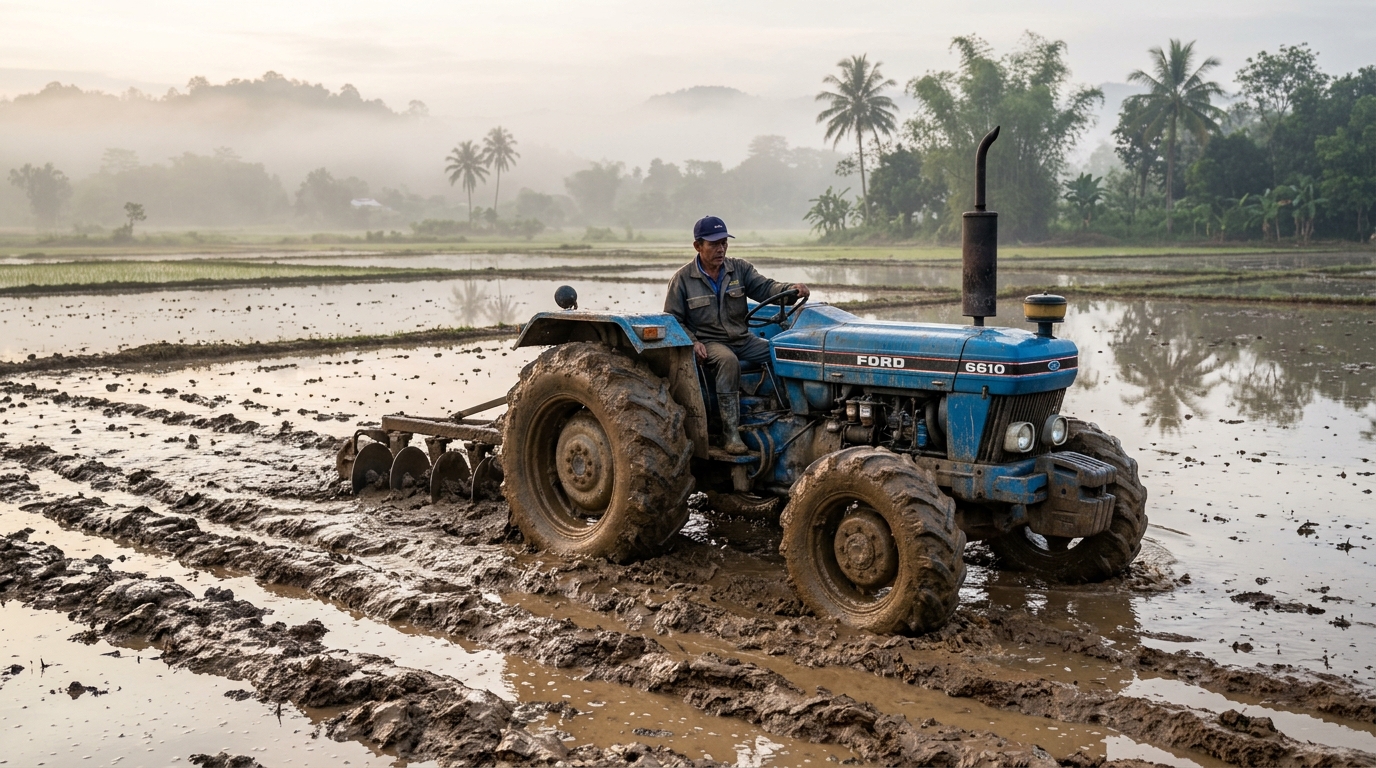
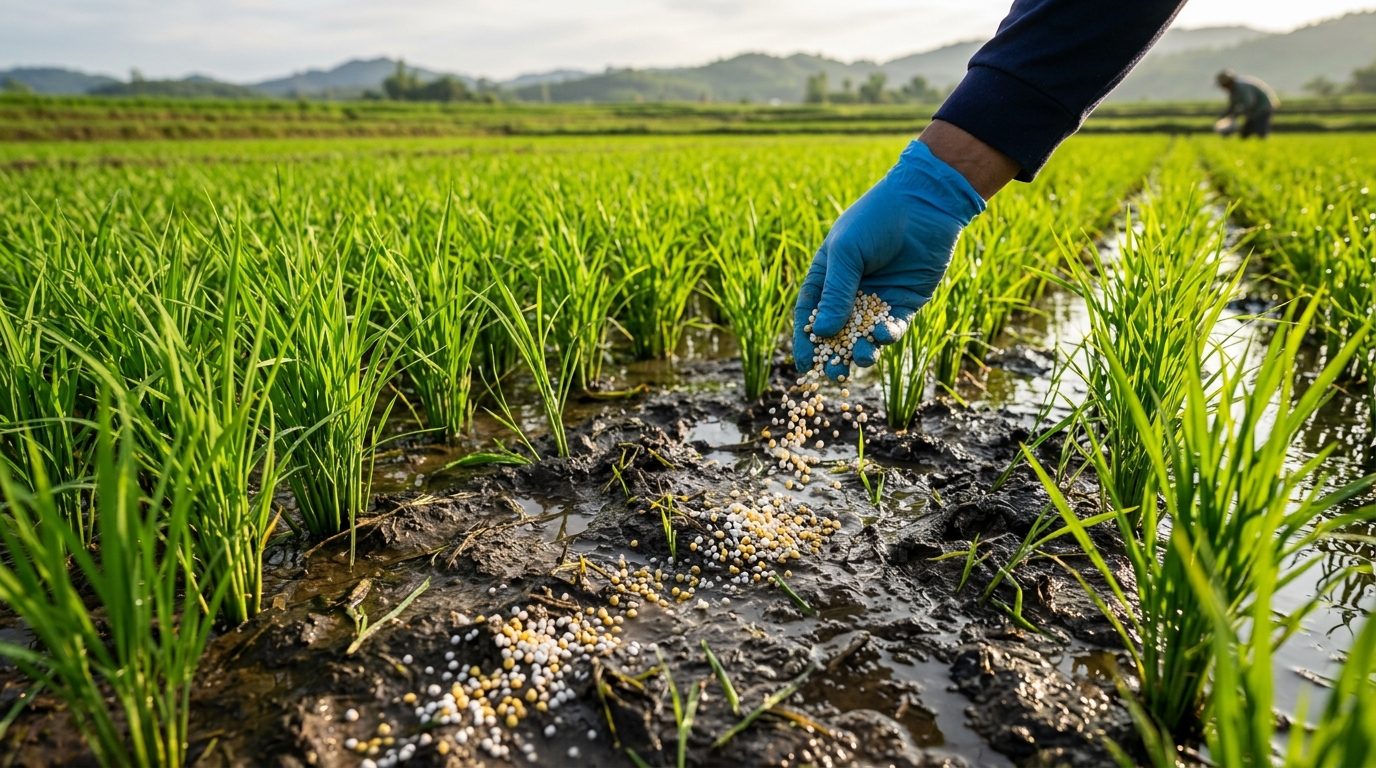
Water management in rice cultivation is about timing and technique, not volume. Continuous flooding—the traditional approach—wastes water, inhibits root development, and in some conditions actually reduces yield. Modern research demonstrates that structured irrigation schedules can achieve equal or better results with 30-40% less water.
The critical periods for rice water demand are specific. The seedling stage (first 21 days) requires consistent moisture but not necessarily flooding. The tillering stage provides the greatest opportunity for water savings through techniques like Alternate Wetting and Drying (AWD). Panicle initiation through flowering is the most critical period—moisture stress during these stages causes direct yield loss that no subsequent management can recover.
As water scarcity intensifies across Pakistan's rice-producing regions, farmers who adopt smarter irrigation practices will succeed better than those who continue traditional continuous flooding under increasingly constrained water supplies.
Understanding Rice Water Requirements
Rice exhibits remarkable phenotypic plasticity—it survives in waterlogged conditions that would kill most crops. Yet this resilience masks vulnerability at specific growth stages where water stress causes irrecoverable yield losses. Understanding these critical periods enables targeted irrigation that satisfies crop needs while conserving water.
The seedling stage (first 21 days after emergence) requires consistent moisture but not necessarily flooding. Young rice plants extract water primarily from the top 15 centimeters of soil. Maintaining soil moisture near field capacity during this period—through light, frequent irrigations rather than deep flooding—produces stronger seedlings with better root systems compared to continuously submerged conditions.
Tillering stage water needs are modest. This is the period where controlled irrigation provides the greatest water savings. Research from Punjab Agricultural University demonstrates that alternate wetting and drying during Tillering reduces water consumption by 30-40% without affecting tiller numbers when stress periods don't exceed the soil's field capacity minus 20% depletion, as confirmed by international rice research at IRRI.
Panicle initiation through flowering represents the most critical water demand period. Moisture stress during these growth stages causes direct yield loss through reduced grain number per panicle, increased spikelet sterility, and lower kernel weight. This is when irrigation should never be delayed regardless of water-saving goals elsewhere in the season.
The Alternate Wetting and Drying Technique
AWD has become the standard recommendation for water-conserving rice cultivation across Asia. The technique alternates between saturated soil conditions and brief drying periods, creating conditions that benefit both the crop and the production economics.
Implementing AWD involves a simple monitoring protocol:
- Insert a hollow PVC pipe (perforated for water observation) into the soil to a depth of 15 cm
- After irrigation, maintain a 3-5 cm water layer across the field
- When water disappears completely from the monitoring pipe, wait 24-48 hours before re-irrigating
- Repeat the cycle throughout the growing season
The 24-48 hour delay after visible water disappearance provides the aerobic soil conditions that stimulate root development without inducing harmful stress. Experienced AWD practitioners develop sensitivity to subtle plant indicators—slight leaf rolling in afternoon heat signals approaching stress that shouldn't be allowed to persist overnight.
During the critical panicle initiation and flowering stages, AWD should be suspended. Continuous shallow flooding during these periods ensures adequate water availability when demand peaks. Returning to AWD practices after flowering completes—the milk stage and beyond—provides meaningful water savings without yield impact.
Field Canal Management and Distribution Efficiency
Even the most sophisticated on-field irrigation practices become irrelevant if water distribution through canals is inefficient. Proper soil preparation methods including laser leveling can significantly improve water distribution efficiency across rice fields.
Traditional earth canals lose 20-40% of carried water to seepage depending on soil type and distance. Clay soils show lower seepage rates but may develop aquatic weed problems that further reduce flow capacity. Lining canals with concrete or geomembrane reduces seepage losses to 5% or below, though the capital investment requires several seasons to recover through water savings.
An intermediate solution uses plastic film lining, available in rolls of various widths, that can be installed without specialized equipment. While less durable than concrete, plastic lining achieves 80-90% seepage reduction at a fraction of concrete lining costs. For frequently moved temporary field channels, this flexibility provides practical benefits.
Field inlet design matters more than most farmers realize. An improperly sized or positioned inlet causes non-uniform field flooding, with higher areas staying dry while lower areas accumulate excess water. Properly designed inlets ensure water spreads across the field within a reasonable time—typically under 4 hours for a well-leveled field receiving a standard flow rate.
Drainage: The Unsung Hero of Rice Water Management
Every irrigation discussion should include drainage, yet it rarely does. Inadequate drainage creates problems as serious as insufficient water: root rot from prolonged saturation, nutrient imbalances from reduced oxidation, and methane production from anaerobic conditions.
Surface drainage removes excess water from the field surface through graded channels. Effective surface drainage requires fields to be sloped—no matter how slightly—in the direction of drainage outlets. Without this slope, low spots accumulate water while surrounding areas may dry excessively. Laser leveling addresses this requirement by establishing consistent grades that facilitate both irrigation and drainage.
Subsurface drainage, while requiring significant investment, addresses problems that surface drainage cannot. Fields with naturally high water tables or those in areas with impervious subsoil layers benefit from buried perforated pipes that lower the water table and allow oxygen to reach root zones. The investment typically proves economical where waterlogging causes recurring yield losses.
Water Quality Considerations
Not all water is equally suitable for rice irrigation. Salinity, sodicity, and specific ion toxicities affect crop performance and long-term soil health.
Salinity—excess dissolved salts in irrigation water—progressively damages rice when electrical conductivity exceeds 2 dS/m. Rice shows good tolerance to moderate salinity during Tillering but becomes increasingly sensitive as flowering approaches. Monitoring irrigation water salinity periodically, particularly in areas with marginal quality sources, enables management decisions before crop damage occurs.
Sodic water containing elevated sodium concentrations causes soil structure deterioration over time. Exchangeable sodium percentage (ESP) increasing above 15% reduces water infiltration, impedes root penetration, and reduces nutrient availability. Gypsum application can ameliorate sodic effects when applied based on laboratory analysis of soil sodium levels.
Scheduling According to Growth Stages
The following table provides general guidelines for irrigation scheduling in rice cultivation. These recommendations should be adjusted based on soil type, weather conditions, and specific variety characteristics.
| Growth Stage | Days After Emergence | Recommended Practice | Water Depth/Area |
|---|---|---|---|
| Seedling | 1-21 | Maintain moisture near field capacity | Light irrigations, no standing water |
| Vegetative/Tillering | 22-65 | Alternate Wetting and Drying (AWD) | 1-3 cm during wet phase, allow to dry |
| Panicle Initiation | 66-85 | Continuous shallow flooding | 3-5 cm maintained water layer |
| Flowering | 86-105 | Continuous shallow flooding | 3-5 cm maintained water layer |
| Grain Filling | 106-130 | Gradual reduction, allow AWD | Reduce depth, maintain some moisture |
| Maturation/Harvest | 131-150+ | Allow field drying for harvest | Drain completely 2-3 weeks before harvest |
This table represents generalized guidelines. Specific variety requirements, regional climate patterns, and soil characteristics all influence optimal scheduling. The critical principle is matching water availability to physiological needs—sparing no water during critical stages while accepting conservation opportunities during tolerant periods.
Technology in Modern Water Management
Soil moisture sensors provide objective data that replaces guesswork in irrigation scheduling. Tensiometers, which measure soil water tension, become particularly valuable in AWD systems where precise timing of re-irrigation matters. Digital sensors connected to smartphone applications enable remote monitoring of field conditions.
Weather-based irrigation scheduling uses evapotranspiration data to estimate crop water use. According to international rice research, when combined with soil moisture monitoring, this approach provides the scientific foundation for irrigation decisions that were previously based entirely on intuition and field observation.
Variable rate irrigation using center pivot or linear move systems, while more common in field crops like wheat and corn, can be adapted for rice cultivation where terrain permits. Variable rate application adjusts water volume across the field based on real-time sensors or prescription maps, optimizing application where soil conditions vary.
Conclusion
Effective water management in rice cultivation combines understanding of crop physiology, soil science, and practical field implementation. The transition from continuous flooding to structured irrigation scheduling requires initial attention but quickly becomes routine. The water savings—often 30-40%—translate directly to reduced pumping costs and improved sustainability.
What strikes me most after years of working with farmers on irrigation practices is how much room for improvement exists on most operations. The gap between typical practice and optimized management is often 30-40% water reduction without any yield penalty. That margin represents profit that flows directly to farmers willing to invest in learning and implementing better practices.
Frequently Asked Questions
How much water does rice actually need compared to continuous flooding?
Alternate Wetting and Drying reduces water use by 25-35% compared to continuous flooding. Research in Punjab conditions showed average water savings of 32% in farmer-managed fields implementing proper AWD protocols without yield reduction.
When should AWD be stopped during rice growth?
AWD must be suspended during panicle initiation (approximately 60-70 days after emergence) through flowering. Maintaining continuous shallow flooding during these critical stages ensures adequate water availability when yield formation is most sensitive to stress.
What are the signs of water stress in rice plants?
Leaf rolling during afternoon heat is the earliest indicator—leaves curl inward along their length. Prolonged stress causes leaf discoloration, slower growth, and ultimately reduced tillering and panicle development. Stress during flowering causes white-tipped or completely empty grain heads.
How does laser leveling improve water efficiency?
Laser leveling creates uniform field grades that ensure consistent water coverage. Without proper leveling, water accumulates in low areas while elevated zones remain dry, creating uneven crop growth and wasting water. Properly leveled fields achieve uniform irrigation with 20-30% less total water application.