Soil preparation is the foundation that determines whether every other input—seeds, water, fertilizers—delivers its full potential. When soil structure, pH, and organic matter levels are right, everything else works better. When they're wrong, no amount of expensive inputs can fully compensate.
Seeds, water, and nutrients all interact within the soil matrix. The ideal rice soil is a clay loam with good water retention while still allowing root aeration during dry periods. Soil pH should fall between 5.5 and 7.0—below that, aluminum toxicity becomes problematic; above it, micronutrients become less available. Organic matter above 3% consistently produces better yields regardless of other inputs.
This guide provides actionable guidance on creating optimal soil conditions for rice cultivation, covering texture analysis, pH management, organic matter building, land leveling, and tillage operations across Pakistan's diverse rice-growing regions.
Understanding Your Soil: The Foundation of Everything
Before touching a single implement, you need to understand what you're working with. Rice grows well across a range of soil types—from heavy clays to sandy loams—but each requires a different preparation approach. The ideal rice soil is a clay loam with good water retention while still allowing root aeration during dry periods.
Texture analysis is something every farmer should understand. The simple jar test—filling a clear jar halfway with soil, adding water, shaking thoroughly, then letting it settle overnight—reveals the sand, silt, and clay percentages. Clay soils settle last and form a thick layer at the bottom; sandy soils show a distinct sand layer immediately. Knowing your soil type tells you what to expect from drainage, nutrient holding capacity, and tillage requirements.
Soil pH profoundly affects nutrient availability, yet many rice farmers never test it. The ideal range for rice is 5.5 to 7.0. Below 5.5, aluminum toxicity becomes problematic and phosphorus locks up. Above 7.0, iron, manganese, and zinc become less available even when present in the soil. Simple pH testing kits are inexpensive and provide information that directly guides lime application decisions.
The Critical Role of Organic Matter
Organic matter is the engine of soil health. It improves water retention, enhances nutrient availability, feeds beneficial soil microorganisms, and contributes to good soil structure. Yet it's the aspect most neglected in intensive rice production systems.
Field experience consistently shows that rice grown in soils with organic matter above 3% performs better than those in depleted soils, regardless of fertilizer programs. The difference manifests in several ways: seedlings establish faster, tillering is more vigorous, plants show less stress during dry periods, and grain quality is measurably better.
Building organic matter is a long-term investment. Adding well-decomposed farmyard manure at 10-15 tons per hectare before land preparation provides immediate benefits while contributing to long-term organic matter pools. Green manures—crops like Sesbania or Dhaincha grown specifically to be incorporated—offer another avenue for organic matter addition that's cost-effective for farmers with available land.
Straw management deserves particular attention in rice systems. Burning rice residue, while convenient, destroys organic matter and releases pollutants. According to international rice research, modern approaches incorporate stubble into the soil, though this requires proper decomposition time before the next crop cycle. The ideal protocol involves disking stubble immediately after grain harvest, allowing partial decomposition for 2-3 weeks, then final plowing to incorporate residue fully.
Land Leveling: More Important Than Most Realize
Precise land leveling ranks among the highest-return investments in rice farming. The benefits are multiple and substantial: uniform water coverage, consistent crop emergence, reduced weed pressure in high spots, improved drainage in low areas, and efficient use of water and nutrients.
Traditional animal-drawn plank leveling can't achieve the precision modern rice cultivation requires. Laser-assisted land leveling, while requiring initial investment, produces field平整度 within ±1 centimeter across the entire field. This precision level translates directly into yield improvements that typically recover the laser leveling cost within 2-3 seasons.
The leveling process involves first creating a rough grade across the field, then fine-tuning to eliminate remaining elevation differences. In clay soils prone to cracking, maintaining a gentle grade rather than dead level accommodates natural soil movement during wet-dry cycles. Experienced levelers develop judgment calls that account for these soil behaviors.
Tillage Operations: When and How Deep
For a complete overview of the entire production cycle, see our step-by-step rice cultivation guide.
Conventional wisdom held that deep plowing was always beneficial. Modern understanding recognizes that rice soils don't require—and may even be harmed by—excessive tillage depth. The goal isn't to create loose soil; it's to establish a properly structured seedbed that facilitates root growth, water infiltration, and nutrient uptake.
A common effective sequence for rice land preparation:
- Initial plowing to 15-20 cm depth when soil moisture is at field capacity
- Secondary cultivation to break clods and incorporate residues
- Flooding and puddling for wet-seeded systems
- Final leveling before planting
Puddling—the process of working saturated soil into a mud slurry—creates a compacted layer that reduces water infiltration from the root zone. This traditional practice serves a real purpose in transplanted rice systems, creating a physical barrier that retains water and simplifies transplanting operations. However, puddling is counterproductive for Direct Seeded Rice systems where good soil structure and drainage are essential for germination.
For DSR and conservation agriculture systems, avoiding puddling and maintaining soil structure becomes paramount. These systems require different preparation sequences that preserve natural soil aggregates and promote good internal drainage. The transition requires rethinking traditional approaches, but the water savings and improved root penetration in subsequent crops justify the change.
Nutrient Base Correction: Setting the Stage
Soil preparation offers the ideal opportunity to address nutrient deficiencies that would limit production regardless of in-season fertilizer programs. Testing soil before land preparation enables targeted base corrections that save money while improving yields.
Phosphorus fixation in alkaline soils is a classic example where base correction pays dividends. Soils with pH above 7.0 lock up phosphorus in forms unavailable to plants. Applying phosphorus at planting time addresses immediate needs, but correcting soil pH through targeted liming addresses the underlying cause, improving phosphorus efficiency for subsequent crops as well.
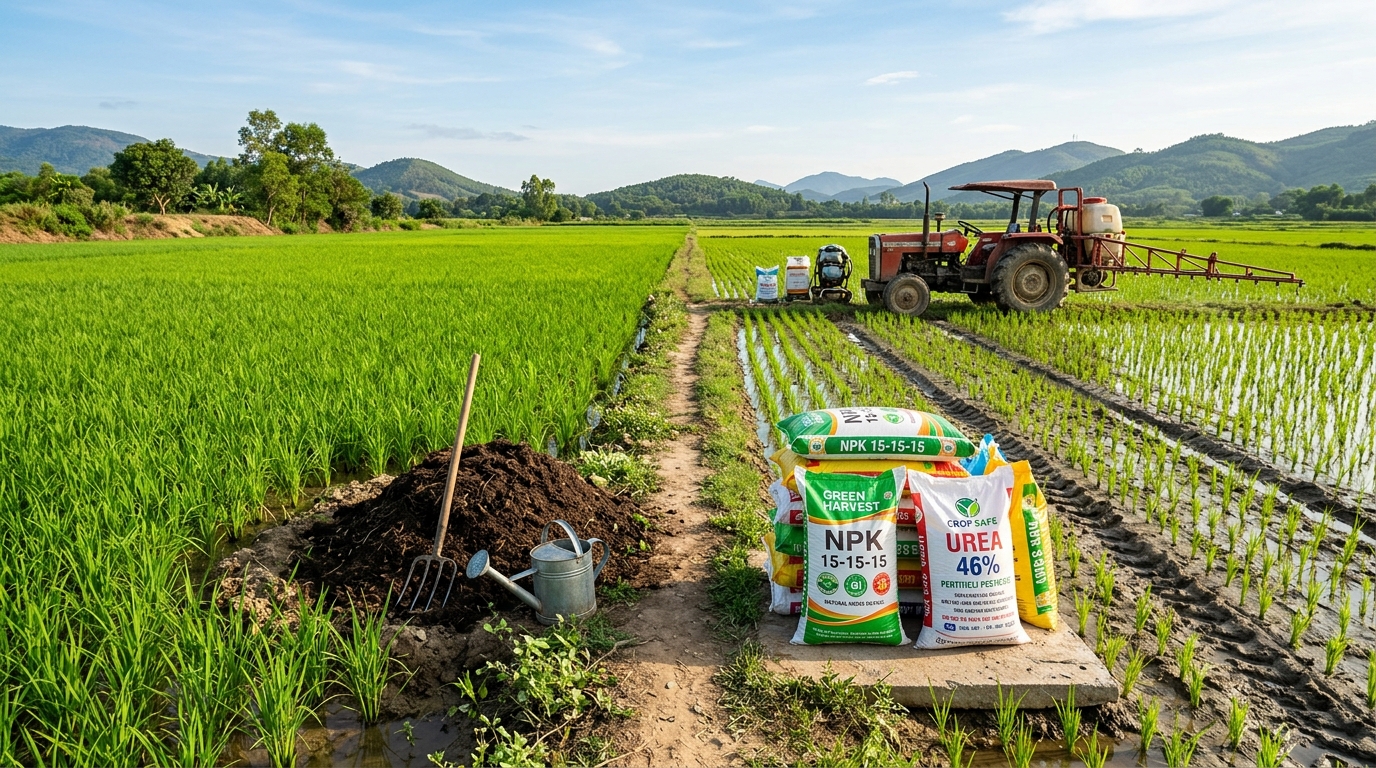
Zinc deficiency is widespread in rice-growing areas and responds well to base application. Incorporating zinc sulfate at 25-40 kg per hectare during land preparation provides adequate zinc for multiple crops. The investment is modest compared to foliar or fertigation applications that would be required during the growing season.
Water Management During Preparation
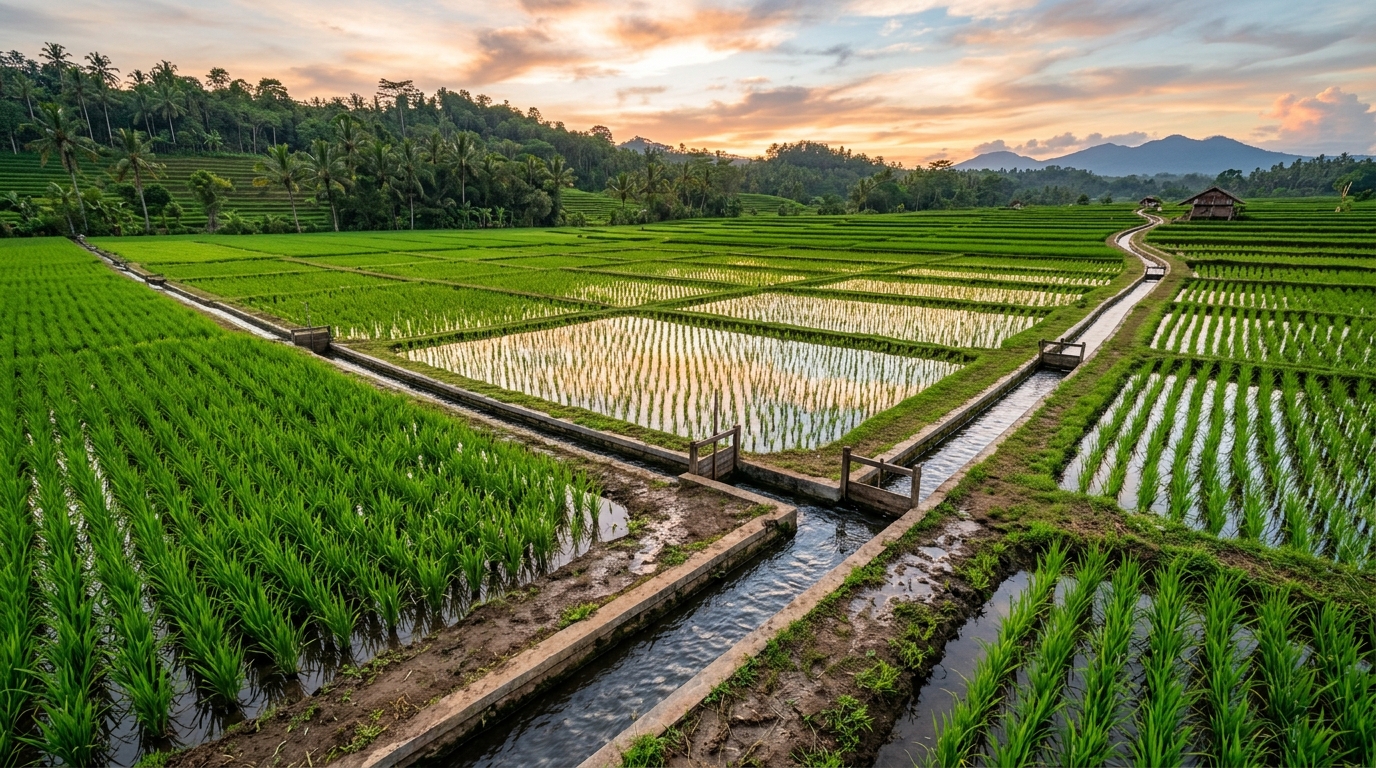
Preferential saturation before planting influences soil behavior throughout the crop cycle. Fields that drain too quickly dry out between irrigations; those that stay waterlogged create anaerobic conditions that inhibit root development.
The ideal approach maintains soil moisture at "field capacity"—the condition where soil is fully saturated but free drainage has stopped. This typically requires 2-3 irrigations spaced 2-3 days apart, allowing each application to infiltrate before the next. The goal is to reach field capacity throughout the root zone before planting.
In heavy clay soils, achieving uniform moisture throughout the profile can take several weeks of careful wetting and drying cycles. Rushing this process and planting while moisture is still uneven in the profile leads to patchy crop emergence and uneven growth stages that complicate later management.
Weed Seed Bank Reduction
Land preparation serves a crucial weed management function by stimulating weed seed germination, then destroying emerged seedlings before crop planting. This "false seedbed" technique depletes the weed seed bank in the surface soil layers where most weed emergence occurs.
The technique involves preparing the seedbed 2-3 weeks before intended planting, then allowing weeds to germinate. When the false seedbed has produced a flush of weed seedlings—typically 1-2 weeks—either light cultivation or non-selective herbicide application destroys them. Repeating this cycle 2-3 times can reduce weed pressure in the subsequent rice crop significantly.
This approach requires planning and patience but rewards the effort with cleaner fields when the crop emerges. Particularly for DSR systems where weed competition is already challenging, reducing the initial weed pressure from the seed bank provides meaningful benefit throughout the season.
Timing Considerations
When to prepare land depends on crop rotation, labor availability, and regional climate patterns. In double-cropping systems where rice follows wheat, land preparation must proceed quickly between crops. In single-crop systems, fields may remain fallow for months, allowing extended preparation periods.
The minimum timeline for proper land preparation—accounting for tillage, organic matter incorporation, base fertilization, and final leveling—is typically 3-4 weeks for fields previously under cultivation. Fields coming from fallow or pasture may require longer periods to achieve proper tilth.
Beginning preparation when soil is too wet causes compaction and clod formation that persists throughout the crop cycle. Testing soil moisture by squeezing a handful—if it forms a ball that crumbles easily when prodded, moisture is about right—prevents this damaging condition. Working saturated soils creates hardpans that restrict root penetration and water infiltration.
Conclusion
Soil preparation for rice cultivation is both science and art. The science provides principles—proper pH, adequate organic matter, good drainage, precise leveling—that apply across diverse conditions. The art lies in implementing these principles when soil, weather, labor, and economic constraints make perfect execution impossible.
The most successful rice farmers I've observed share a patient, deliberate approach to land preparation. They start early enough to do the job right rather than rushing to meet arbitrary deadlines. They invest in understanding their specific soil conditions rather than applying generic recommendations. And they recognize that every hour spent on proper preparation pays dividends throughout the growing season.
Frequently Asked Questions
What is the ideal pH for rice cultivation?
Rice grows best in soil with pH between 5.5 and 7.0. Below 5.5, aluminum toxicity and phosphorus lockup become problems. Above 7.0, availability of iron, manganese, and zinc decreases even when these nutrients are present in adequate amounts.
How much farmyard manure should be applied before rice planting?
Application rates of 10-15 tons per hectare of well-decomposed farmyard manure provide optimal benefits. Higher rates may cause lodging; lower rates don't provide meaningful organic matter contributions. The manure should be fully decomposed to avoid nitrogen tie-up during decomposition.
Why is laser land leveling important for rice farming?
Laser leveling creates field平整度 within ±1 cm, ensuring uniform water coverage, consistent crop emergence, reduced weed pressure in high spots, and efficient water and nutrient use. The investment typically recovers within 2-3 seasons through improved yields and water savings.
What is the false seedbed technique?
The false seedbed technique prepares the seedbed 2-3 weeks before planting, allowing weeds to germinate, then destroys them before the actual crop is planted. This depletes the weed seed bank in surface soil layers and reduces weed pressure in the subsequent rice crop.
How long does proper land preparation take?
Proper land preparation requires a minimum of 3-4 weeks for previously cultivated fields, including time for tillage, organic matter incorporation, base fertilization, and final leveling. Fields coming from fallow may require longer periods to achieve proper soil conditions.