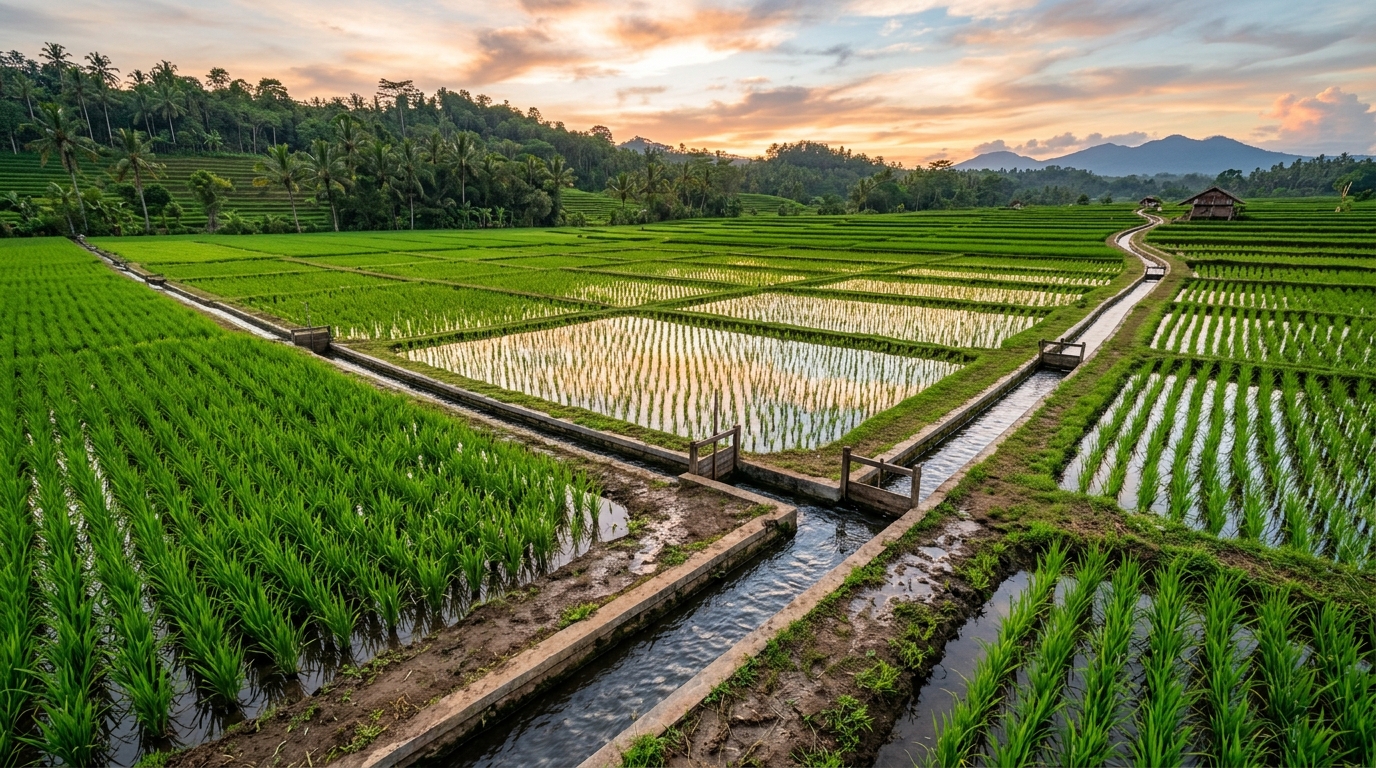
Rice yields in Pakistan show a widening gap between farmers using traditional flooding methods and those who have adopted modern approaches. Over the past two decades, agricultural research has produced innovations including Direct Seeded Rice (DSR), System of Rice Intensification (SRI), drone-based nutrient management, and AI-powered disease detection. The toolkit has expanded dramatically—the challenge is understanding which techniques actually deliver results versus those that are merely marketing buzz.
Modern rice farming isn't about replacing human expertise with technology. It's about augmenting it with science-backed strategies that address the fundamental drivers of yield: plant population, tiller production, and grain weight. This guide examines the most effective techniques that have proven themselves in real field conditions across Pakistan.
Understanding the Foundation: What Determines Rice Yield
Before diving into specific techniques, let's establish what actually drives rice productivity. Rice yield is fundamentally determined by three factors: the number of plants per unit area, the number of tillers per plant, and the weight of each grain head. Every modern technique ultimately aims to optimize one or more of these parameters.
Traditional transplanting methods, while familiar to most farmers, inherently limit yield potential. The process of raising seedlings in nurseries, then moving them to flooded fields, causes transplant shock that can set plants back by 10-15 days. Modern approaches recognize that minimizing this root disturbance leads to stronger, earlier-tillering plants.
Soil health plays an equally critical role that many farmers underestimate. In my conversations with agronomists across Sindh and Punjab, the consensus is clear: soil with organic matter content above 3% consistently produces better yields regardless of which cultivation method is used. Building and maintaining soil health should be the foundation of any modern rice farming strategy.
Direct Seeded Rice (DSR): The Game-Changer
DSR has emerged as one of the most significant advances in rice cultivation over the past fifteen years. Instead of transplanting seedlings, seeds are directly sown into prepared fields. The benefits are substantial: labor requirements drop by 50-60%, water consumption reduces by 30-35%, and the crop cycle shortens by 10-12 days.
The technique works best on well-drained soils with good moisture retention capacity. Fields must be laser-leveled precisely—within ±1 cm elevation difference—to ensure uniform germination and crop establishment. This precision requirement initially seemed daunting to farmers I worked with, but modern laser land levelers have made it accessible even for smaller landholdings.
Seed treatment becomes crucial in DSR systems since seeds face more environmental stress than in nursery conditions. Treating seeds with fungicides like Carbendazim before sowing reduces fungal disease incidence by up to 40%. Equally important is seeding depth—2-3 cm is optimal, any deeper and emergence rates suffer noticeably.
Weed management represents the biggest challenge in DSR. Without the flooding that suppresses weeds in conventional systems, herbicides become necessary. Pre-emergence herbicides like Butachlor applied within 72 hours of sowing provide effective early-season weed control. This is an area where consulting local agricultural extension services pays real dividends—they can recommend region-specific herbicide protocols.
System of Rice Intensification (SRI): Working with Plant Biology
SRI takes a fundamentally different approach by creating ideal conditions for each individual plant rather than managing rice as a mass crop. Developed in Madagascar and now practiced worldwide, SRI principles have shown yield increases of 20-50% in field trials across multiple countries, according to international agricultural research from FAO.
The core SRI practices include:
- Transplanting very young seedlings (8-12 days old) at a single seedling per hill
- Wide plant spacing (25x25 cm or greater)
- Alternate wetting and drying irrigation cycles
- Intensive organic matter application
- Mechanical weeding to aerate soil
What makes SRI particularly interesting is how it leverages the rice plant's natural tillering capacity. When given space and optimal conditions, a single rice seedling can produce 30-50 tillers compared to the typical 10-15 in conventional systems. Each tiller produces its own grain head, so the yield multiplication is significant.
However, SRI demands more management skill and attention. The alternate wetting and drying cycle, while saving 30-40% water compared to flooded systems, requires careful monitoring. Soil cracks forming during dry phases indicate excessive stress that can damage roots. Successful SRI practitioners develop an intuitive feel for soil moisture that takes a season or two to build.
Precision Agriculture: Technology Meets Tradition
The integration of GPS guidance, drone imagery, and sensor technology into rice farming represents the cutting edge of agricultural innovation. While full-scale precision agriculture requires significant investment, even components of it can dramatically improve efficiency.
Soil mapping using GPS-based systems allows variable rate application of fertilizers—applying more nutrients where soil tests indicate deficiencies and less where levels are adequate. Trials in Pakistan's rice bowl regions have shown 15-20% fertilizer savings with improved yields through variable rate technology.
Drone-based spraying has transformed pesticide and herbicide application, particularly in large-scale operations. Drones can apply treatments at 6-8 acres per hour compared to 1-2 acres with manual sprayers. More importantly, drone application achieves better coverage, especially on the dense canopy that rice develops in productive fields.
NDVI (Normalized Difference Vegetation Index) imaging from drones or satellites provides objective data on crop health across entire fields. Green areas indicate vigorous growth; yellow or brown patches signal problems requiring attention. This technology transforms farming from reactive to proactive—addressing issues before they impact yield significantly.
Nutrient Management: Feeding the Crop Right
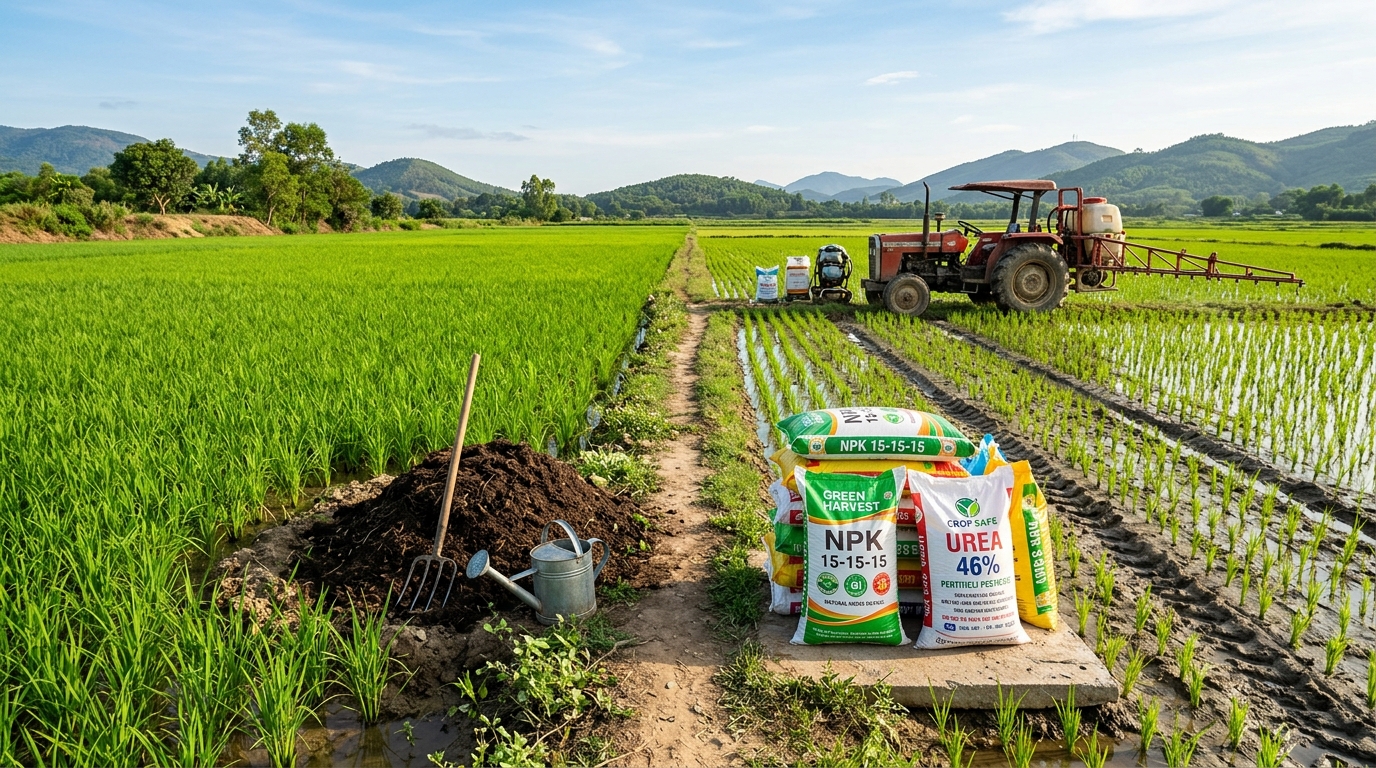
Rice has specific nutritional requirements that modern soil science can address with precision. The macronutrients nitrogen, phosphorus, and potassium are essential, but micronutrients—particularly zinc and silicon—play underappreciated roles in rice quality and yield.
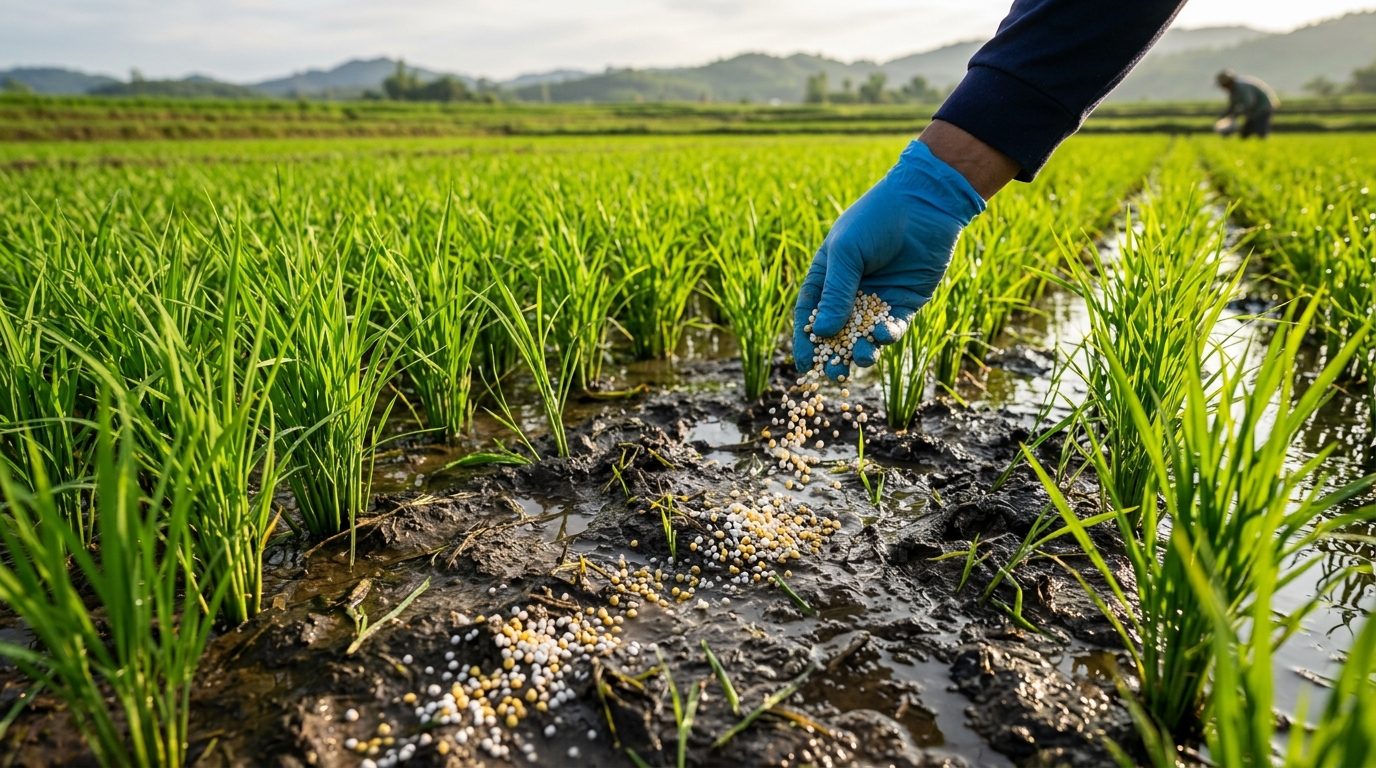
Nitrogen management deserves special attention because rice's needs vary dramatically through its growth cycle. The plant requires relatively little nitrogen during seedling and Tillering stages, peaks during panicle initiation, and tapers off during grain filling. Splitting nitrogen applications to match these physiological needs prevents both deficiency and luxury consumption that weakens stalks and increases lodging risk.
Leaf color charts (LCC) provide a simple, low-tech tool for making nitrogen application decisions. By comparing leaf color against a standardized chart, farmers can assess nitrogen status without laboratory testing. Research validates that LCC-based nitrogen application reduces fertilizer use by 15-25% while maintaining or improving yields.
Water Management: More Crop Per Drop
Water scarcity affects rice production across Pakistan, making efficient water use increasingly critical. While rice has historically been grown with continuous flooding, research confirms that controlled irrigation produces equivalent or better yields with significantly less water.
Alternate Wetting and Drying (AWD) involves allowing fields to drain naturally before re-flooding, creating periods of soil aeration. Research conducted by the International Rice Research Institute demonstrates that AWD can reduce water use by 25-30% without yield reduction when implemented correctly. The key is monitoring—the soil should be allowed to crack but not reach the point where leaf rolling occurs.
Laser land leveling deserves mention again because its impact on water efficiency is profound. Unlevel fields waste water in low areas while leaving higher areas water-stressed. A properly leveled field ensures uniform water coverage and can reduce irrigation requirements by 20-30% simply through improved distribution.
Pest and Disease Management: Prevention Over Cure
Integrated Pest Management (IPM) combines biological, cultural, and chemical controls in a systematic approach that reduces pesticide dependency while maintaining protection. Modern rice farming embraces IPM because pesticide-only strategies inevitably fail through pest resistance evolution.
Scouting—regular field monitoring to assess pest and disease pressure—forms the foundation of effective IPM. Treatment decisions based on economic thresholds rather than calendar-based spraying schedules reduce unnecessary pesticide applications. For instance, stem borer treatment becomes economical only when moth counts exceed specific thresholds—applying treatments regardless of pest levels wastes money and disrupts beneficial insect populations.
Bacterial leaf blight and blast disease represent major disease threats that respond to integrated management strategies. Using resistant varieties, managing nitrogen fertility to avoid excessive lush growth, and removing crop residues all contribute to disease suppression. When chemical control becomes necessary, selecting appropriate fungicides and timing applications correctly maximizes effectiveness.
Harvest and Post-Harvest: Protecting What You've Grown
Even the best cultivation practices become wasted if harvest and post-harvest management allow quality losses. Modern rice farming addresses these final stages with equal attention.
Timing harvest correctly impacts both yield and quality. Harvesting when grain moisture content is 20-24% minimizes shattering losses while ensuring proper grain filling completion. Waiting for fields to dry completely before harvesting creates unnecessary shattering; harvesting too early results in green, lightweight kernels that downgrade quality.
Proper drying brings grain moisture to the safe storage level of 12-14%. Sun drying remains common but produces inconsistent results—modern batch dryers provide uniform drying that preserves grain quality. The difference shows clearly in milling yield and head rice recovery percentages.
Conclusion
Modern rice farming techniques offer real advantages for farmers willing to learn and adapt. The key is starting with one or two new practices that match your specific conditions rather than attempting wholesale system changes overnight. Whether you begin with DSR on suitable fields, try SRI principles in a trial plot, or simply implement better nutrient management, incremental improvements compound into significant yield gains over seasons. For more on improving yields through better field practices, see our guide on water management tips for rice crops.
The farmers I see succeeding with modern techniques share common traits: they're curious, willing to experiment carefully, and attentive to results. They keep records of what they try and what happens, building personal knowledge that no external advice can replace. That combination of science-based techniques with farmer intuition represents the future of productive rice agriculture.
Frequently Asked Questions
What is the best rice farming technique for beginners?
Direct Seeded Rice (DSR) offers the most accessible entry point because it reduces labor requirements and simplifies operations compared to traditional transplanting. However, success with DSR requires excellent field leveling and careful weed management in the first 30 days after sowing.
How much water can be saved with modern rice farming techniques?
Alternate Wetting and Drying (AWD) saves 25-30% water compared to continuous flooding. Combined with laser land leveling, total water savings can reach 40% without yield reduction when properly implemented.
Is System of Rice Intensification (SRI) suitable for all rice varieties?
SRI works best with vigorous, tillering varieties. Modern high-yielding varieties respond particularly well because they're bred for characteristics SRI leverages—strong tillering capacity and good responsiveness to optimal growing conditions.
How do drone-based farming technologies help rice cultivation?
Drones serve multiple purposes: rapid pesticide and herbicide application over large areas, NDVI imaging for crop health monitoring, and seeding in difficult-to-access fields. The technology is particularly valuable for operations above 25 acres.
What nitrogen management practices improve rice yields?
Splitting nitrogen applications into 3-4 doses matching the crop's growth stages—seedling, Tillering, panicle initiation, and grain filling—prevents both nitrogen deficiency and excess that causes lodging. Using leaf color charts helps determine exact application timing and amounts.